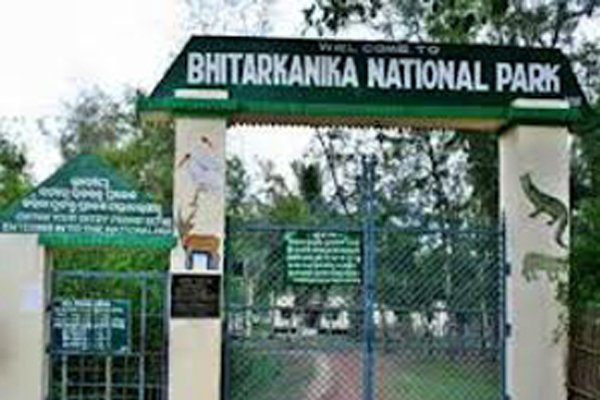

Bhubaneswar, Nov 28: Headcount of mammals inhabiting the mangrove cover and wetland sites of Bhitarkanika national park in Eastern Indian Odisha State’s Kendrapara district is being conducted for the second successive year.
Count is also being made of the number of Olive Ridley turtles engaged in annual mass nesting at Gahirmatha beach.
The Gahirmatha marine sanctuary comes under the administrative jurisdiction of the national park.
The enumeration of spotted deer, wild boars and hyenas has been undertaken to assess the numerical growth pattern of these animals living within the marshy wetland and mangroves of this Ramsar international wetland site, officials said.
The enumerators are carrying out the headcount on the basis of distinct footmarks of deer, boar and hyenas.
The annual headcount of estuarine crocodiles, winter migrant avian species, monsoonal migrant water birds is undertaken every year.
From observation made in the past by the wildlife staff, the number of these mammals is rising.
Of the factors contributing to the rising graph, the rich and lush-green mangrove forest has turned out to be a favourable factor as it provides an ideal habitat for hyenas, boars and deer, officials said.
Lack of human interference in their habitation corridors has also been conducive for their rising numbers, they said.
Besides, there is an imbalance in the predator-prey base in Bhitarkanika.
Unlike the Sundarbans, the Bhitarkanika mangroves are devoid of tigers and only estuarine crocodiles prey upon these animals, they said.
As many as 3,085 spotted deer and wild boars were found inhabiting the national park as per last year’s census report.
However, sighting of other mammal species such as hyena, fishing cats, wolf, mongoose, jungle cat and fox was on the lower side.
While 1,872 spotted deer were found inhabiting Bhitarkanika during the last census exercise, 1,213 wild boars were found to have had made the forest their home.
Forest officials said, “The spotted deer and wild boars are itinerant species who stray into nearby human settlements on the close periphery of the park, vandalise crop and agriculture fields, thus triggering man-animal conflict.”
As per last year’s census findings, apart from deer and boars, Bhitarkanika is home to nearly 2,000 additional mammal species like monkeys, hyenas, jackals and fishing cats.
As many as 4,740 mammals were spotted inhabiting the Bhitarkanika national park during last year’s enumeration, the officials said. The breakup of the other mammals was monkeys- 1,522, jackals- 305, common langur- 39, otter- 38, sambar deer- 17, jungle cat- 11, fox- 10, Mongoose- 7, wolf- 7, fishing cats-3, hyena- 1.