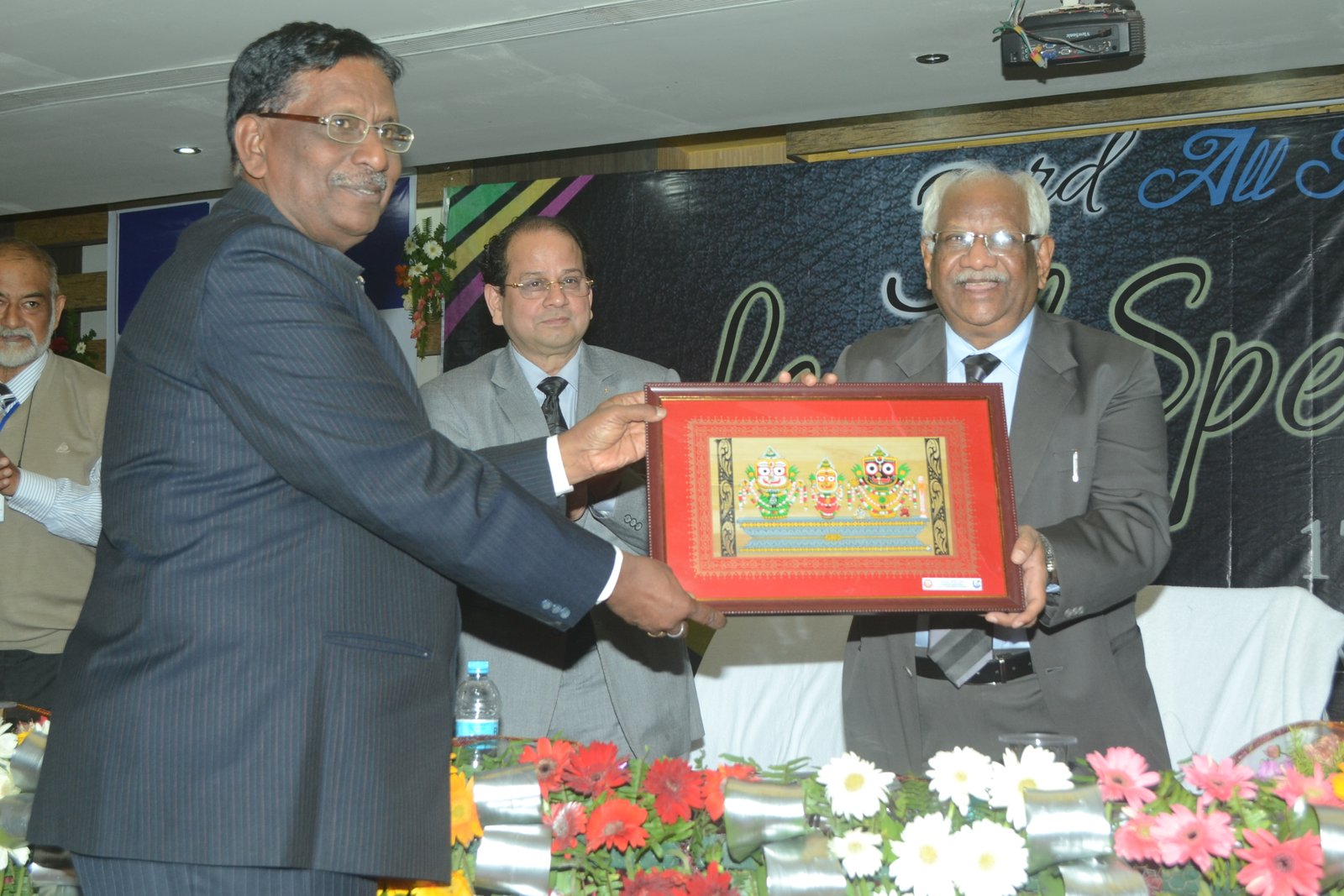

Bhubaneswar, Dec. 19: Democracy has taken roots in India because of its constitution and strong judiciary, former judge of the Orissa High Court, Justice A.S.Naidu said on Thursday.
“India’s constitution is one of the best in the world and its judiciary unbiased and strong. This has helped the country to remain strong in spite of its diversity,” Justice Naidu said at ‘Legal Spectra- 2015’, the 3rd All India Legal School Meet organized by the SOA University.
The fact that the Indian constitution had undergone many amendments only pointed to the fact that the constitution was living and not static, he said adding several landmark judgements of the supreme court had helped the country’s thought process.
The state’s Advocate General, Mr. Surya Prasad Mishra and Vice-Chancellor of the Utkal University of Culture, Prof. Debendranath Jena attended the program as guests of honour. Prof. D.P.Ray, former Vice-Chancellor of OUAT and Principal Advisor to the President of Siksha ‘O’ Anusandhan, presided.
Students representing ten law schools from all over the country are participating in the 4-day Law School Meet.
Justice Naidu referred to ten landmark judgements of the apex court which included the Keshavananda Bharati case, the Shahbano case and the Indira Sawhney case saying they redefined the path that India needed to pursue. Law students must be aware of such judgements, he said.
The Keshavananda Bharati judgement, he recalled, held that the parliament could amend any part of the constitution as long as it did not alter the basic structure of the constitution. In the Shahbano case, the apex court awarded alimony to a muslim woman after divorce even when the personal law was against it.
The other cases he referred to included the right to life case involving Maneka Gandhi, the Olga Tellis case, the Union Carbide case, Nirabati Behera case concerning custodial violence, judicial appointment case, Visakha case and the Aruna Shanbaug case.
Mr. Mishra encouraged the students to take to the legal profession with seriousness saying it was the lawyers who won freedom for India and helped change the society.
Prof. Jayadev Pati, Dean of the faculty of legal studies of SOA University and Prof. Prabir Kumar Patnaik, faculty member also spoke.