Over 200 Buddhist Sites In Odisha Prove Buddhism’s Strong Presence In Past
Bhubaneswar: May 10: The most important day for Buddhists around the world is Buddha Purnima, sometimes referred to as Vesak or Buddha Jayanti. Three significant moments in Gautama Buddha’s life are honoured on this holy day: his birth, his enlightenment (Bodhi), and his passing (Parinirvana). Buddha Purnima, also called the Thrice Blessed Festival, is a day of intense spiritual contemplation and festivity.
Siddhartha Gautama was born on the full moon day of Vaisakha approximately 563 BCE in Lumbini (modern-day Nepal). His birth signalled the coming of a being destined to impart great spiritual insights into the world.
After years of ascetic practices and meditation, Siddhartha reached enlightenment at the age of 35 under the Bodhi tree in Bodh Gaya. This incident changed him into the Buddha, the “Awakened One,” and signalled the start of his teaching career.
Parinirvana: At the age of 80, Buddha achieved Parinirvana in Kushinagar, ending the cycle of birth and death. This incident represents his ultimate freedom from worldly existence and misery.
The Indian festival of Buddha Purnima is a highly revered occasion. Lumbini, Bodh Gaya, Sarnath, and Kushinagar are some of the most important Buddhist pilgrimage destinations, where worshippers congregate for rituals including worship, meditation, and prayer. The monasteries and temples are decked out in festive garb, and the worshippers chant, give alms to the monks, and do good deeds.
Odisha is steeped in Buddhist heritage, with several temples and monasteries dating back to the sixth century BC. Archaeological artefacts and the existence of Buddhist populations attest to the region’s long history of Buddhism.
In spite of the fact that the Buddha himself never set foot in Odisha, the religion had an early impact there.
Over 200 Buddhist sites may be found in Odisha, with the Jajpur district housing a wealth of artefacts associated with the Mahayana school of thought.
The Ratnagiri, Udayagiri, and Lalitgiri sites form the Diamond Triangle, a revered Buddhist pilgrimage site.
The later school of Buddhism, known as Vajrayana, is thought to have its roots in Odisha.
According to some sources, the Bhaumakaras clan, who ruled from the eighth to the tenth century, established Buddhism as the official religion.
The 7th-century Chinese traveler Hiuen Tsang recorded the flourishing Buddhist terrain of Odisha during his visit.
Buddhist images, viharas, and stupas show that the impact of Buddhism on Odisha persisted far into the 15th century.
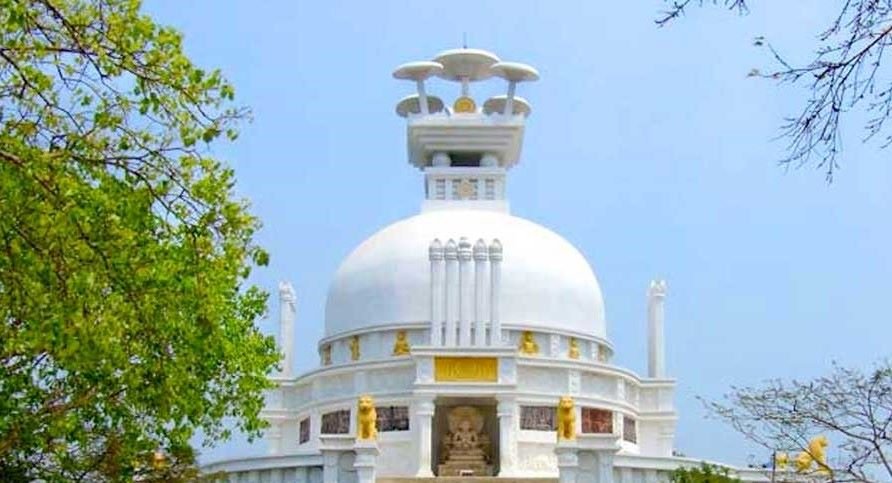
Dhauli, Kuruma, and Langudi are just a few of the popular Buddhist tourist destinations in Odisha.
The Buddhist population in Odisha is estimated to be around 138,520, according to data from the 2011 census.